Design in the Details: Lessons from the Streets of Barcelona

Every year, the team at HarrisonStevens switch on their out-of-offices and set off on our annual study trip. This year,…
Every year, the team at HarrisonStevens switch on their out-of-offices and set off on our annual study trip. This year, we jetted off to sunny Barcelona. For some, it was a first-time visit; for others, a return to a much-loved city. Over three days of sunshine, sangria, and studying, we explored the layers of landscape and urban design that make Barcelona so distinctive.
Beyond its iconic landmarks, the city reveals its true character in the small things — the texture of paving stones, the rhythm of benches, and the thoughtful layout of public space. In this blog, Grace shares a reflective exploration of these design moments and the subtle details that give Barcelona its unmistakable charm.
A Journey Through the City
Our days in Barcelona unfolded as a series of design discoveries, each neighbourhood offering unique insights into how detail shapes experience.
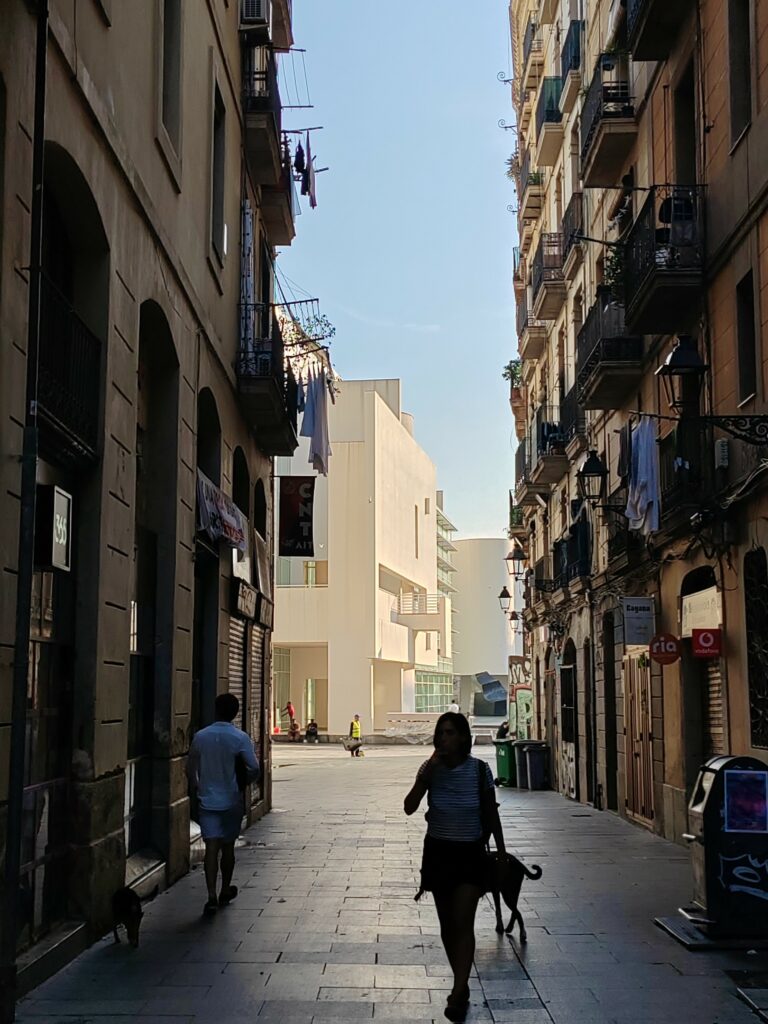
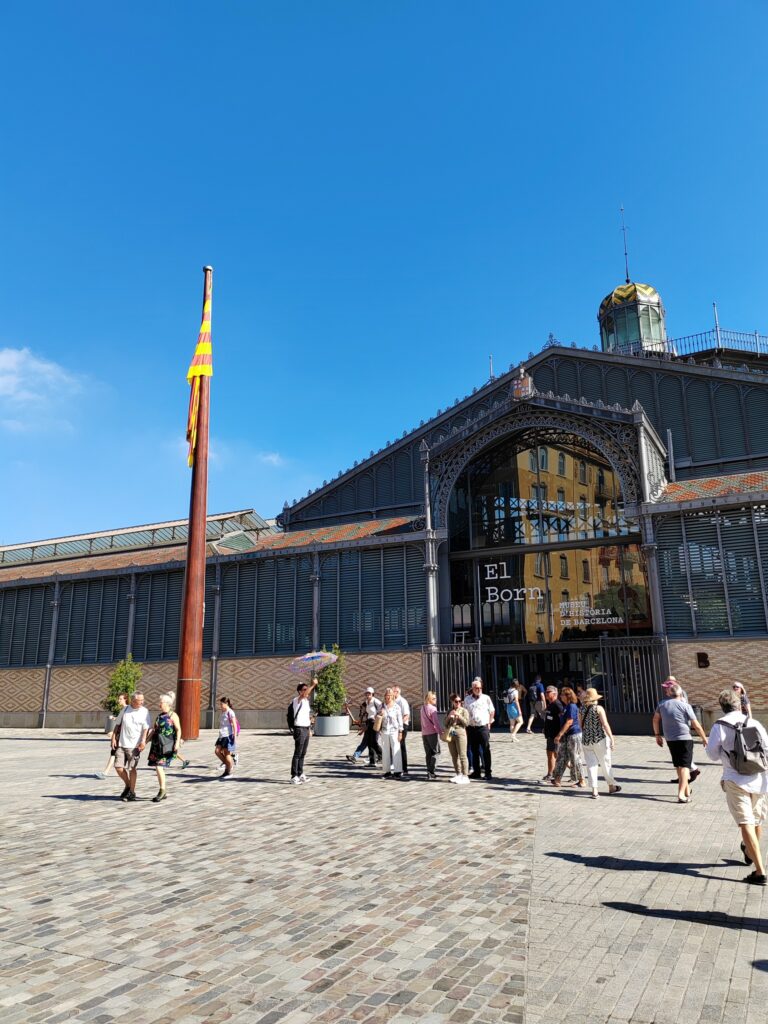
Friday began in the Gothic Quarter, where layers of history meet careful contemporary intervention. Among the narrow streets and shaded courtyards, and between stops at the many beautiful historic markets, we explored the El Born Centre of Culture & Memory.
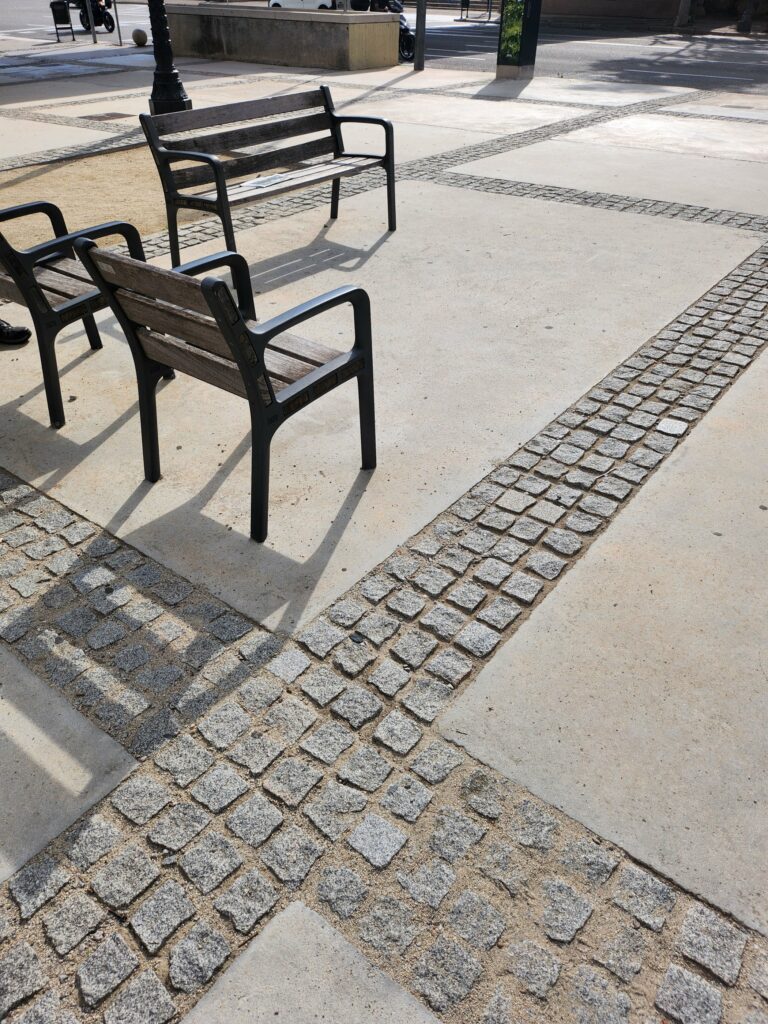
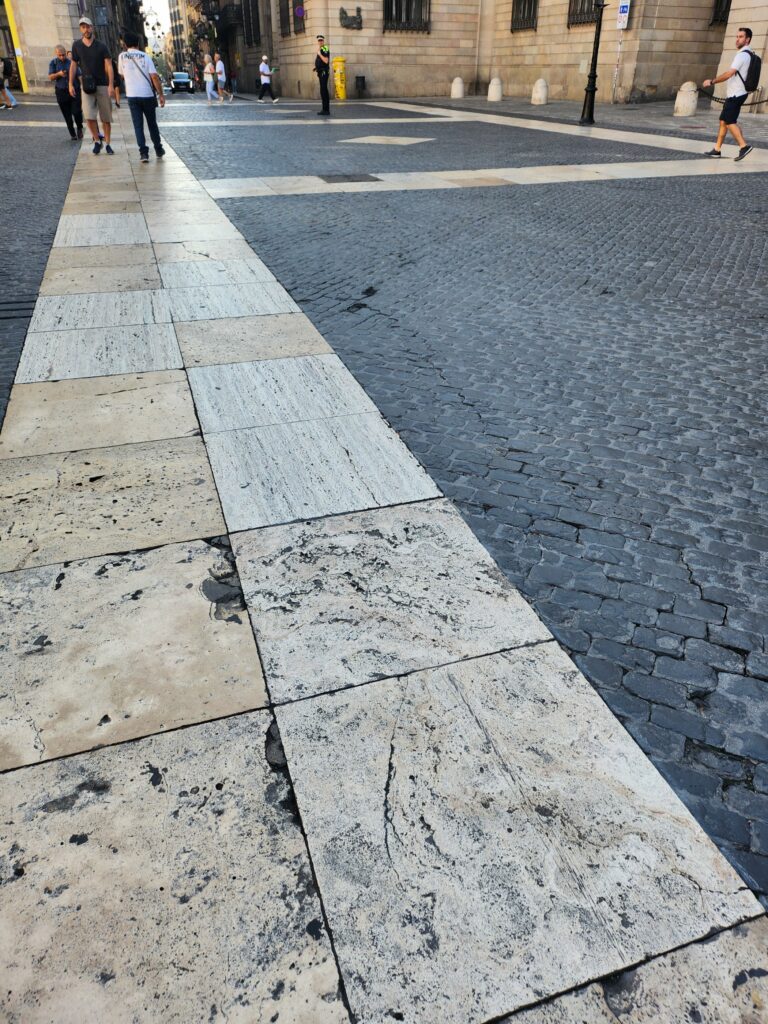
Once a 19th-century market hall, the building now stands as a cultural space and archaeological site, preserving the remains of the old city uncovered beneath its floor. Turning the corner from a narrow street into the large open plaza, the centre and surrounding plaza, feels spectacular. As we approached, our attention naturally shifted from the sky to the ground. In true landscape architect fashion, we were drawn to the subtle yet beautiful paving designs leading to the entrance. The texture, tone, and precise geometry of the stones subtly frame the historic structure, creating a respectful threshold between past and present. It was a simple but powerful reminder of how surface treatment can communicate heritage without imitation.
From there, we moved north to the Eixample district, exploring Carrer del Consell de Sant, a striking example of urban regeneration. The streets here have been re-imagined as shared, human-scaled spaces: wide pavements, integrated planting, seating areas, and generous shaded zones combine to create a sense of calm within the city’s grid. It was inspiring to see how re-balancing the relationship between people and vehicles can transform the atmosphere, turning traffic corridors into social spaces. Several moments along the walk highlighted how pedestrian-focused the street felt — it was almost hard to imagine cars navigating the shared surface.
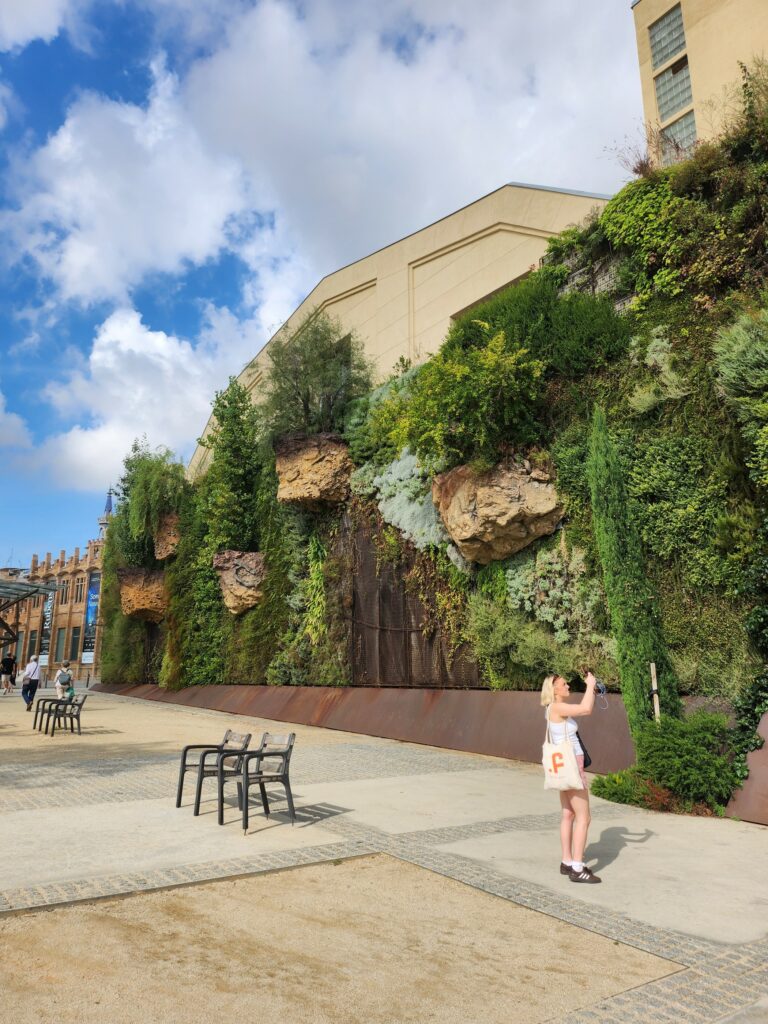
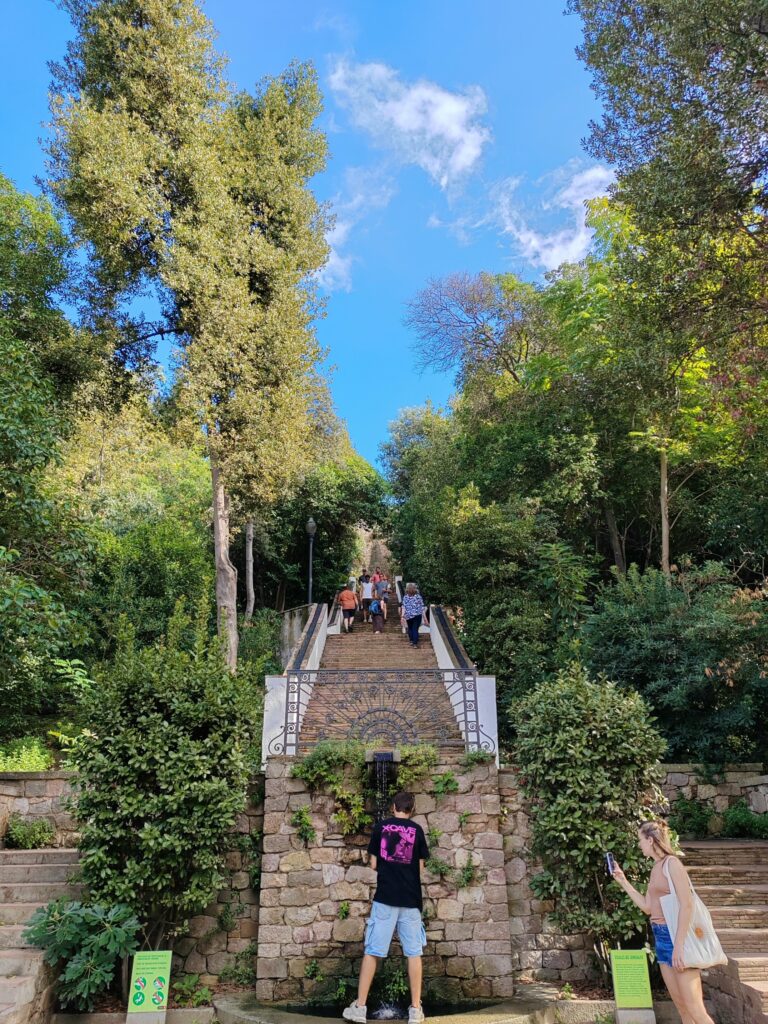
Saturday took us to Montjuïc, but not before stopping at the Jardín de la Rambla de Sants. This linear garden quickly became a favourite — an elevated promenade of planting, light, and shadow. Walking along it felt cinematic, with a gentle disconnect from the bustling city below. Glimpses through the tree canopies offered framed views of the streets beneath, capturing how landscape can create new vantage points that reconnect movement, ecology, and everyday life.
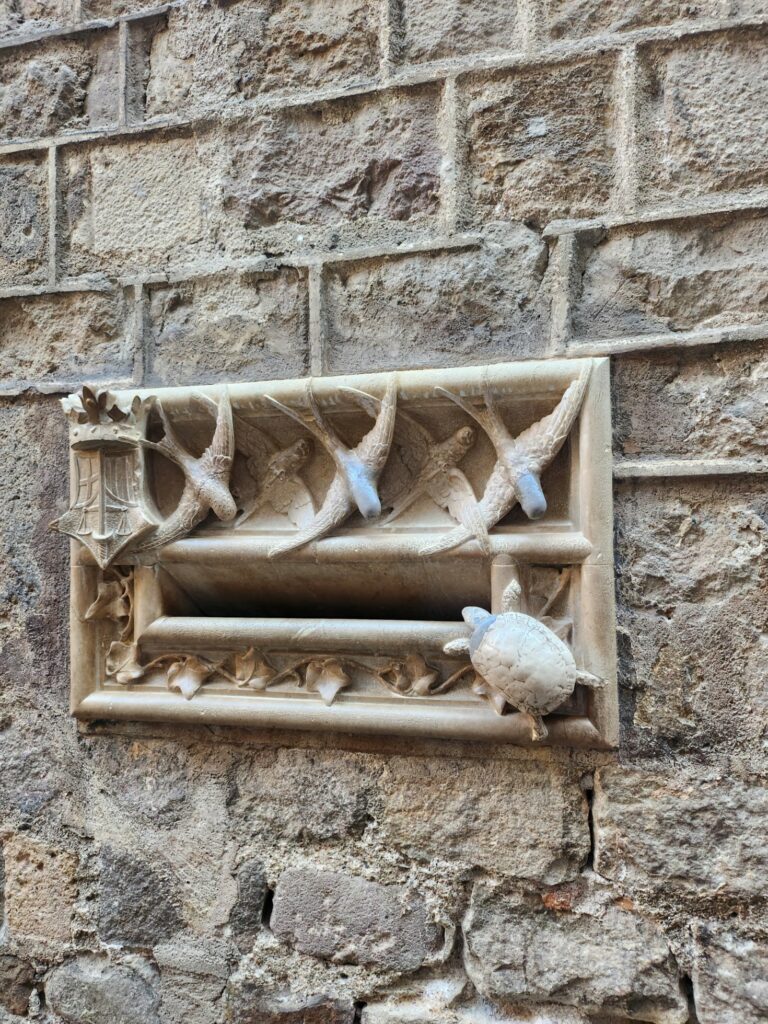
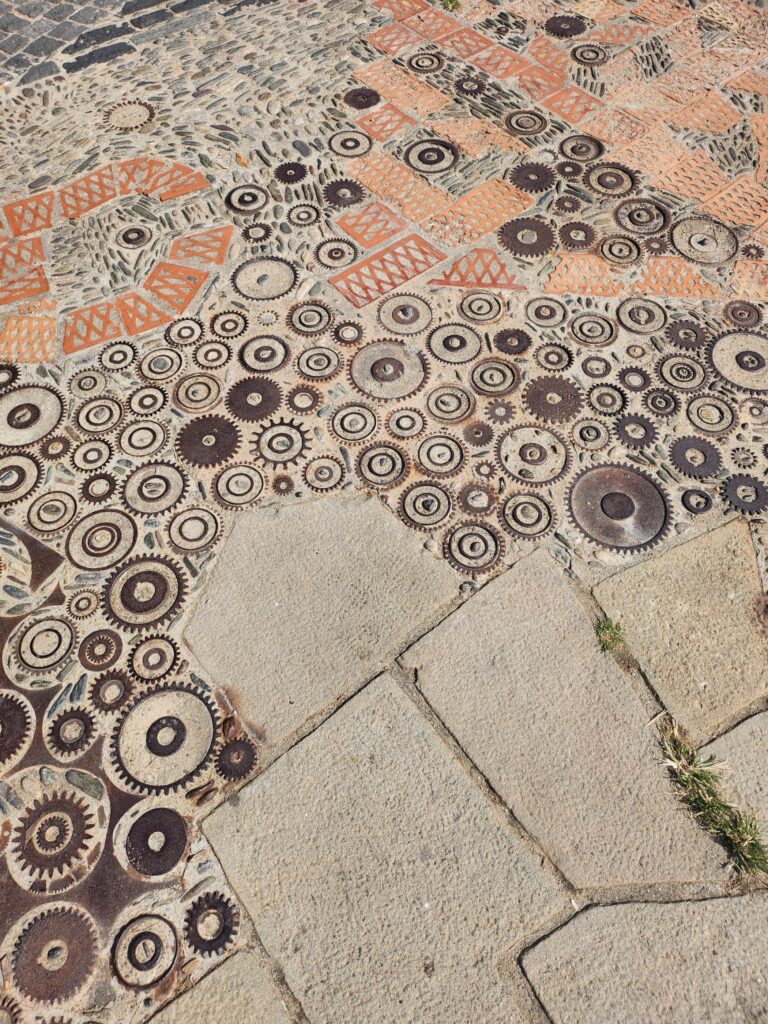
Further up Montjuïc, near the Mirador de l’Alcalde, we discovered another moment of design intrigue. Fragments of the old cable car infrastructure had been carefully inlaid into the paving — a delicate layer of memory embedded in the landscape. It was a reminder of how powerful storytelling can be when applied to public space.
Together, these experiences revealed a city that celebrates design at every scale. From the smallest tile to the largest avenue, each element felt intentional, crafted to create harmony between people, place, and history.
The Language of the Streets
In Barcelona, the streets tell the story of the city. Every square, street, and courtyard has its own rhythm — a language written in stone, tile, and pattern. As landscape architects, we were drawn to how these surfaces — often overlooked — define movement, slow pace, and shape experience.
The city’s paving is remarkably diverse yet always feels appropriate for the spaces it inhabits. In the Gothic Quarter, centuries of footsteps have worn narrow cobbles smooth, creating undulating pathways that catch the light and guide you through the labyrinthine laneways.
A few metro stops away, in the Eixample, the grid of streets opens into wider shared spaces, laid with the Panot de Flor — the iconic flower tile designed by Josep Puig i Cadafalch in the early 1900s — providing a constant connection between old and new.
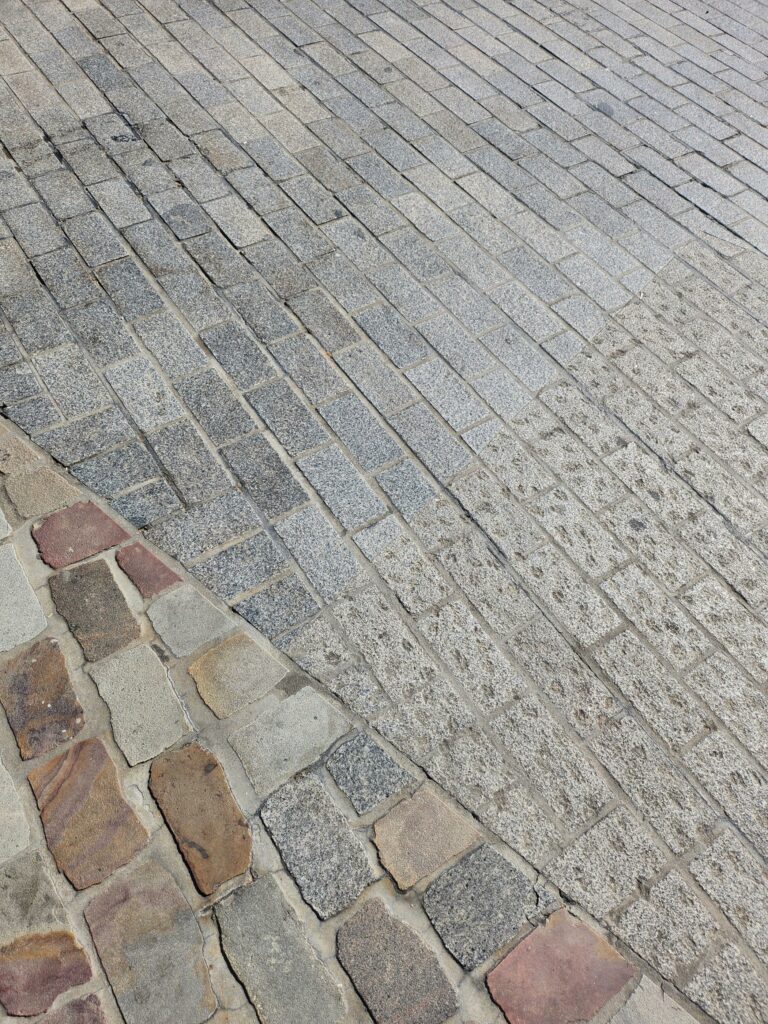
Transitions between materials are thoughtfully considered. Junctions of new interventions with historic fabric never disrupt the visual language but offer small moments of interest. Throughout Barcelona, it is clear the city values craft and coherence. The city manages these interfaces of old and new very well, with bold new materials complementing the heritage aspects of the city.
Noticing these details encouraged reflection on how we design. How do materials weather? How can patterns slow or guide movement? How can the smallest junction elevate an everyday street into something special?
Public Life & Human Scale
Walking around the city, there was an overwhelming sense of invitation — streets felt shaped by people, not dominated by traffic. Barcelona’s public spaces are memorable not just for their visual quality, but for how they make you feel. Design details are consistently grounded in human scale: kerbs, benches, trees, and thresholds feel proportionate to people rather than vehicles.
Narrow streets open unexpectedly into sunlit plazas, where changes in paving texture signal a shift from movement to gathering. Seating areas extend naturally into streets, offering pauses at corners, viewpoints, and shaded spots. Even in busier areas, a rhythm balances energy with calm.
Benches, bollards, lighting, and even bins form a subtle but cohesive vocabulary, quietly supporting the life of the street without demanding attention. Moments of pause — whether on shaded benches, in public gardens, or at seating nooks next to a café — felt intentionally inviting. Barcelona encourages a relaxed exploration of its streets through considered design, where rest feels like an integral part of the experience, not a necessity.
Final Thoughts
Our study trip to Barcelona reminded us that great cities are defined not only by landmarks, but by the care embedded in every detail. The paving beneath your feet, the shade of trees, the transition of light and shadow — these quiet gestures shape the true identity of the city.
For me, the experience reinforced the importance of observation: slowing down, noticing, and learning from places that have mastered the dialogue between design and life. As we return to our own projects, we carry forward these lessons from Barcelona: that thoughtful detailing can transform the ordinary into the extraordinary, and that human experience should always be at the heart of every landscape we create.